
If the 2008 financial crisis taught us anything, it was the enormous role that financial institutions and technological systems play for the global economy.
The fintech phenomenon and the huge capital of human talent and technological resources that had been accumulated over the last 20 years allowed new innovative business models focused on technology to be offered to the end customer.
The paradigms in which systems had been built in the past have started an enormous transformation. The strategic role that IT Systems provide in the financial companies has drastically changed by the increasing technology-based processes in the value chain of these institutions.
The COVID-19 pandemic of 2020 caused a paradigm shift and accelerated the delivery of services and plans of digital transformation in companies. The availability and low cost of new cloud-based technologies as well as Artificial Intelligence and the Internet of Things has changed the way products and services are provided globally. New economic challenges are being addressed in a technology-based efficiency landscape.
As companies traditionally rely on technology as an aid in the provision of their services, it is not surprising that the largest companies worldwide have mature platforms such as SAP in some part of their value chain.
The talent that SAP possesses globally for the development of software and business solutions has been the pillar supporting all kinds of solutions, including those to financial services. Solutions such as Loans and Deposit Management, Payment Engine, Lease and Treasury Management, among others, have been available in the market for years and have been updated and strengthened with new technologies such as SAP Hana in the Cloud.
Convergence
In the financial world, we expect a high demand of projects for technology upgrades and offers of mature products and services such as those currently owned by SAP. In the coming years we will see a series of projects to benefit and take advantage of the new technology, with products that know the industry deeply and have shown results during the last years.
Extensive industry knowledge coupled with a large investment in time and development of technologies focused on data management and user experience is something that will begin to capitalize more in the coming years, partly derived from the term of support that some solutions will have in the following years.
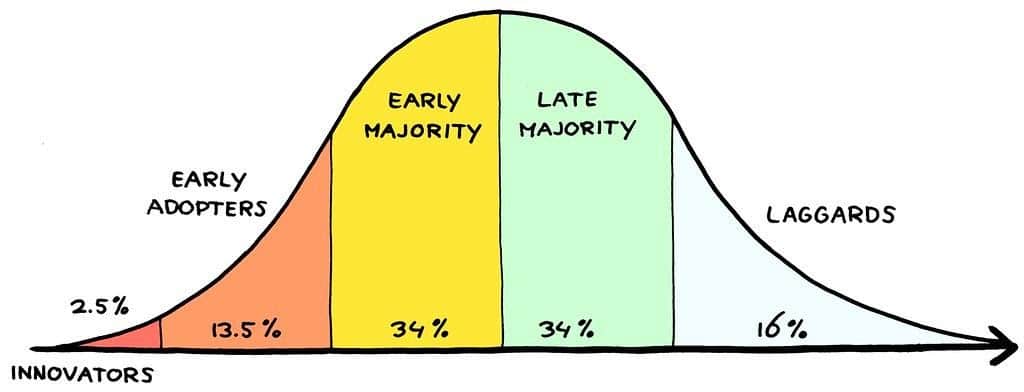
Financial services have already shown in recent years an enormous interest in these new technologies. Evidence of this can be found in America, in the huge number of software specifically for the financial sector into which large investments have been made in the last 5 years.
Fintech solutions are already providing value in this region in specific parts of business models, but not replacing the core of business. It is here where we will see in the following years a large series of projects that will continue to bet on proven solutions in the industry, capable of efficiently and safely supporting financial services, making use of new technologies and with the ability to integrate in a much simpler way the specific solutions that are offered in fintech.
Those of us who are familiar with the SAP solutions market and the financial sector know first-hand the enormous value proposition for customers, available in new products. Sticking to the reference models in the adoption of new innovative solutions, it is to be expected that we will witness a transition from the early adoption phase to the phase of greater adoption where we will begin to see these kinds of projects more frequently.
Speaking specifically of the year 2022 we can consider that the effects of uncertainty caused by COVID-19 have decreased in terms of economic forecasts, leaving organizations in the opportunity to renew their current SAP systems or adopt new SAP solutions based on these new technologies, mainly to increase their efficiency and lower their costs in a more competitive market as well as with the challenge of covering the demand for only digital experience that users own.